The Hidden Metric Top Shopify Stores Track (That You Don't)
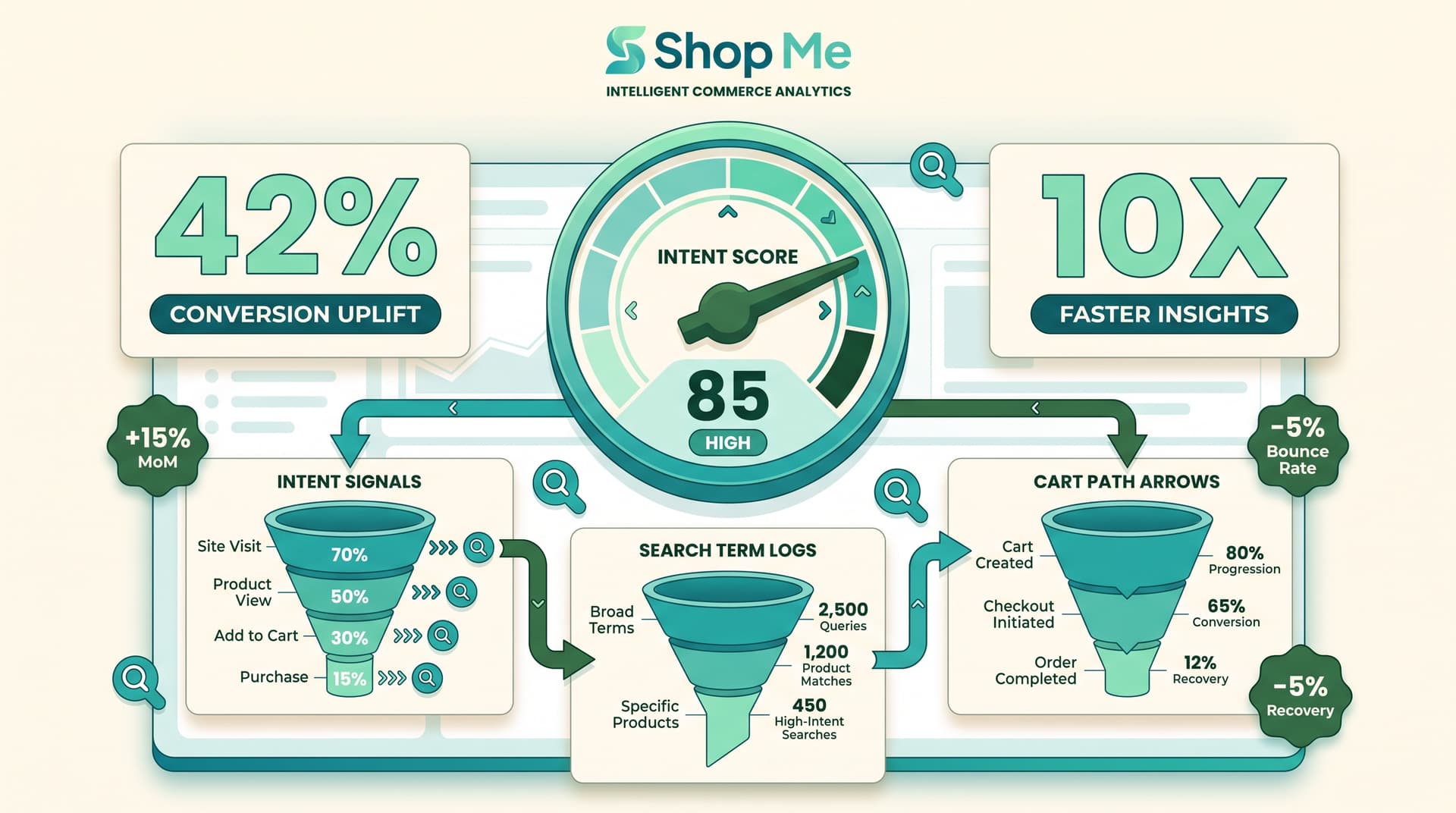
Basic Shopify analytics tell you what sold and when. They miss the real driver behind every purchase decision: customer intent.
Most store owners stare at bounce rates and add-to-cart numbers without ever learning why a browser clicked away or what finally pushed a visitor to buy. That gap costs real revenue every day.
What is customer intent tracking?
Customer intent tracking goes past surface numbers to capture the reasons shoppers arrive, hesitate, or convert. It looks at search patterns, product comparisons, and exit points to predict next moves.
According to Baymard Institute, the average checkout abandonment rate hits 69.8 percent. According to Shopify benchmarks, stores that add behavioral signals to their reports see conversion lifts between 18 and 25 percent within the first quarter.
Why standard reports fall short
Shopify's default dashboard shows page views and total sales. Those figures never explain the moment a shopper compared two sizes and still left. They ignore questions typed into search that never produced results.
Sound familiar? You check your analytics every morning but still wonder what actually changed buyer behavior last week.
Three signals that reveal real intent
- Repeated views of the same product followed by a price check on a different color
- Search terms that include size, material, or use-case details
- Quick exits right after seeing shipping costs or restock dates
Tracking these moments turns raw data into clear next steps. One store owner noticed consistent searches for "organic cotton kids tees" yet the site only surfaced polyester options first. Swapping the sort order lifted category revenue 31 percent in two weeks.
How conversation data fills the gaps
Support chats and abandoned cart messages contain the clearest intent clues. Shoppers often spell out exactly what they need or why they stopped.
Instead of guessing from heatmaps alone, pull direct lines from those exchanges. A single sentence like "I need this by Friday for a gift" tells you urgency matters more than color options that week.
Simple steps to start tracking intent today
- Add search term logging with zero-results alerts
- Tag every cart abandonment note with the main objection mentioned
- Review product comparison sequences in your analytics export each Monday
Small habits like these surface patterns faster than waiting for another monthly report.
Frequently Asked Questions
How does customer intent differ from basic Shopify reports?
Basic reports show what happened. Intent data explains why visitors took each action.
What tools help track intent on Shopify?
Search logs, tagged support notes, and conversation summaries reveal the reasons behind clicks and exits.
How long until intent tracking improves sales?
Most stores see measurable lifts in four to six weeks after fixing the top three friction points uncovered.
Can small stores use intent tracking?
Yes. Even reviewing ten chat threads per week surfaces actionable fixes without extra staff.
Does intent data require coding?
No. Many stores start by manually tagging notes inside existing apps before adding automated dashboards.
Want AI like this for your store?
The first 25 brands get free beta access + an exclusive lifetime deal.
Start Free Trial